

Meeting CE Standards: MOES Sets the Standard as a Certified Smart Home Lights Manufacturer
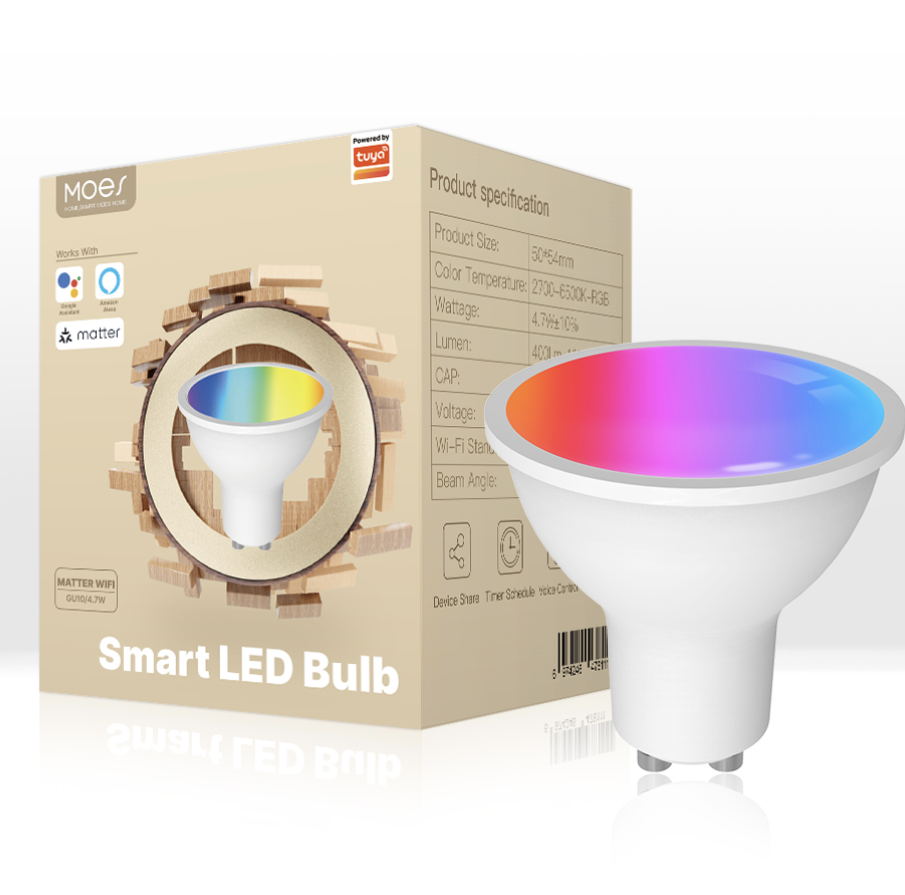
Traditional lighting systems are defined by localized, mechanical operation, offering zero flexibility once a switch is flipped. In contrast, Smart Home Lights utilize Wi-Fi, Matter, and Zigbee protocols to allow for dynamic dimming, millions of color variations, and autonomous scheduling through mobile applications or voice commands. The industry is currently moving toward an era of hyper-connectivity, where lighting is expected to interact seamlessly with other household sensors to save energy and enhance well-being. This shift is driven by a global demand for "smart cities" and sustainable living, creating a market where the distinction between a simple bulb and a sophisticated data-node is increasingly blurred.
To navigate this highly technical landscape, adherence to international regulatory benchmarks is indispensable. The Federal Communications Commission (CE) standards represent the authoritative baseline for electronic products entering the North American market. CE certification ensures that the radio frequency (RF) emissions from smart devices do not cause harmful interference with other telecommunications services and that they operate safely within the public wireless spectrum. For any manufacturer, meeting these standards is a rigorous process that validates the internal engineering integrity of the product. It serves as a seal of trust for consumers and distributors, confirming that the device is built to high electromagnetic compatibility (EMC) requirements. By prioritizing these certifications, professional enterprises demonstrate their commitment to global safety and reliability.
Three Pillars of CE Compliance in Smart Lighting Technology
Meeting the stringent CE requirements requires a multi-faceted approach to electrical and radio engineering. As a leading manufacturer, MOES integrates these technical standards directly into the hardware architecture of its smart lighting products:
Advanced Electromagnetic Interference (EMI) Control:
A primary requirement of CE compliance is the suppression of unintended electromagnetic noise. Smart bulbs must convert high-voltage AC power to low-voltage DC, a process that naturally generates high-frequency noise. MOES utilizes high-performance EMI filters and strategic PCB shielding to ensure that these emissions remain well below the strict limits set by the CE. This prevents the lights from interfering with home Wi-Fi routers, televisions, or medical devices.
Precision Radio Frequency (RF) Management:
Because smart lights act as wireless transmitters, they must operate strictly within designated frequency bands. Through the use of high-precision crystal oscillators, MOES ensures that its Wi-Fi and Matter-enabled bulbs maintain frequency stability, preventing "signal drift" into unauthorized emergency or aviation bands. Furthermore, the firmware is optimized to manage transmission power, ensuring a robust connection without exceeding safe RF exposure levels.
Electrical Stability and Surge Protection:
Inconsistent power is a leading cause of harmful radio interference. To counter this, MOES employs high-precision constant-current drivers in its LED downlights and bulbs. This stabilizes the current regardless of external voltage fluctuations, which not only extends the life of the LED but also eliminates the electrical noise that can lead to CE non-compliance. Built-in transient voltage suppressors further protect the smart modules from power surges, ensuring the device remains a "clean" participant in the household’s electrical ecosystem.
Other Breakthroughs
Matter protocol: The introduction of the Matter protocol has further elevated the technical requirements for smart lighting manufacturers. Matter is an industry-unifying standard that allows devices to work across different platforms—such as Amazon Alexa, Google Home, and Apple HomeKit—using a common language. For a manufacturer, implementing Matter over Wi-Fi requires a higher level of processing power and more robust memory management within the bulb itself.
Connection to a localized mesh network: Specifically, the MOES Matter Wi-Fi Smart Bulbs (available in GU10, E27, and E14 formats) are designed to handle 16 million RGB colors while maintaining a persistent connection to a localized mesh network. This ensures that even if the external internet connection is interrupted, the internal logic of the smart home remains functional. This focus on "local-first" control is a significant trend in the IoT sector, as it prioritizes user privacy and reduces latency, making the smart home feel as responsive as a traditional mechanical switch.
Intelligent automated scheduling: Built-in independent timer function allows users to customize the light's on/off times, assisting with daily work rhythms and eliminating the need for any tedious manual operation.
Highly efficient, durable, and environmentally friendly design: Utilizing energy-saving technology to optimize power consumption, it significantly reduces energy costs while substantially extending bulb lifespan, making it an ideal choice that balances economic efficiency and environmental protection.
A Mission for a Sustainable and Connected Future
As the smart home industry matures, the focus is shifting away from the novelty of remote control toward the necessity of sustainable automation. The future of the industry lies in the seamless integration of energy-efficient hardware with intelligent software. By maintaining a strategic location in Wenzhou and leveraging regional manufacturing excellence, enterprises like MOES are able to keep pace with the evolving demands of global consumers.
The commitment to meeting CE standards is a reflection of a broader dedication to quality and service. It is a promise that every smart LED downlight or Matter-enabled bulb is engineered to perform reliably over its entire lifespan. By combining the benefits of renewable energy with the precision of IoT technology, the industry is contributing to a smarter, more sustainable future where technology serves both the user and the planet.
To explore the full range of certified smart lighting and energy solutions, visit the official website: https://www.moespower.com/
YUEQING NOVA ELECTRONICS CO.,LTD
YUEQING NOVA ELECTRONICS CO.,LTD
+86 183 5773 4976
info@moespower.com
Legal Disclaimer:
EIN Presswire provides this news content "as is" without warranty of any kind. We do not accept any responsibility or liability for the accuracy, content, images, videos, licenses, completeness, legality, or reliability of the information contained in this article. If you have any complaints or copyright issues related to this article, kindly contact the author above.
