

Biomass Gasification Market Size to Reach USD 28.32 Billion by 2032 from USD 17.86 Billion in 2025
Biomass Gasification Market
Biomass Gasification Market Size, Growth Drivers, Application Trends, and Industry Outlook 2025–2032
Growing Adoption of Biofuels and Hydrogen to Boost Market Growth”
PUNE, MAHARASHTRA, INDIA, February 11, 2026 /EINPresswire.com/ -- Market Valuation and Growth Projection— Fortune Business Insights
The global Biomass Gasification Market — a pivotal segment of the renewable energy industry — is poised for substantial growth as demand for sustainable energy, decentralized power generation, and low-carbon fuels rises globally. According to Fortune Business Insights, the market was valued at approximately USD 17.20 billion in 2024 and is expected to expand to USD 17.86 billion in 2025, before reaching USD 28.32 billion by 2032. This growth represents a compound annual growth rate (CAGR) of 6.81 % during the forecast period from 2025 to 2032.
Request a Sample PDF: https://www.fortunebusinessinsights.com/enquiry/request-sample-pdf/biomass-gasification-market-112336
Biomass gasification is a thermochemical conversion process that transforms organic biomass feedstocks — such as agricultural residues, forestry waste, municipal solid waste, and animal waste — into synthesis gas (syngas). Syngas can be used for power generation, heat production, transportation fuels, and chemical synthesis, offering an environmentally cleaner alternative to conventional fossil fuel-based energy.
Market Dynamics and Growth Drivers
The biomass gasification market is driven by increasing global emphasis on sustainable energy solutions, waste valorization, and energy diversification. Governments, private enterprises, and research institutions continue to invest in technologies that reduce greenhouse gas emissions and enhance energy security, placing biomass gasification at the forefront of renewable energy strategies.
Key growth drivers include:
• Growing Adoption of Renewable Energy: Rising environmental concerns and commitments to reducing carbon emissions are encouraging nations to shift toward renewable energy sources like biomass gasification, which can offer consistent, dispatchable energy supplies.
• Decentralized Power Generation Demand: Biomass gasification supports decentralized and rural electrification initiatives, particularly in regions with abundant agricultural and forest residues, enabling communities to generate heat and electricity locally.
• Biofuel & Hydrogen Applications: Advances in biomass gasification technologies facilitate the production of biofuels and hydrogen, which are gaining traction as sustainable alternatives in transportation and industrial sectors.
• Policy Support & Incentives: Governments are increasingly implementing supportive policies, fiscal incentives, and renewable mandates that encourage investment in gasification infrastructure and renewable energy projects.
• Utilization of Waste Feedstocks: The ability to convert diverse biomass feedstocks — including municipal solid waste and agricultural by-products — into usable energy aligns with broader waste management and circular economy goals.
Together, these factors create a favorable environment for the adoption of biomass gasification across industrial, energy, and environmental applications — reinforcing its potential as a key renewable technology in global energy systems.
Market Segmentation Analysis
The biomass gasification market can be segmented by feedstock, gasifier technology, application, and region, each representing distinct demand dynamics and deployment strategies.
1. By Feedstock:
• Agricultural Residues: Crop wastes and agricultural by-products are widely available in rural and agricultural regions, making them a preferred feedstock for decentralized biomass power projects.
• Forest Biomass/Wood: Wood chips and forestry residues are major feedstocks in industrial and power generation gasification applications due to their energy density and availability.
• Animal Waste & Others: Non-traditional biomass feedstocks like animal waste and organic municipal waste are increasingly used, particularly where circular economy approaches are prioritized.
2. By Gasifier Technology:
• Fixed Bed Gasifiers: Typically favored for small to medium-scale decentralized applications due to their simpler designs, lower capital costs, and reliability.
• Fluidized Bed & Advanced Gasifiers: These technologies offer higher thermal efficiency and better feedstock flexibility, appealing to larger industrial or power plant deployments.
3. By Application:
• Power Generation: A leading application segment, where syngas is used to generate electricity and heat for industrial or grid-connected systems.
• Heat Generation: Biomass gasification can support industrial and residential heat needs, offering a cleaner alternative to fossil fuel combustion.
• Transportation Fuels & Chemicals: Syngas can be processed into biofuels, hydrogen, or chemical feedstocks — expanding market reach into transportation and chemical sectors.
These segments illustrate how biomass gasification supports multiple energy and industrial applications, enhancing its role in diversified renewable energy portfolios.
Regional Market Performance
The biomass gasification market demonstrates distinct regional dynamics based on resource availability, policy incentives, and energy infrastructure needs.
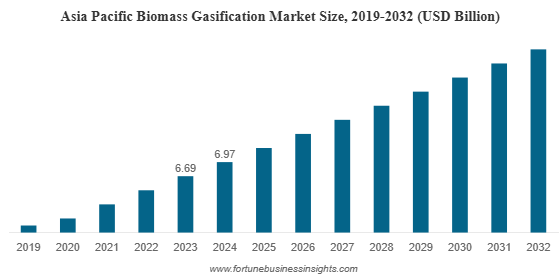
Asia Pacific is expected to maintain a strong growth trajectory due to abundant agricultural and forest biomass, coupled with government support for rural electrification and renewable energy projects. Countries like India and China are actively pursuing biomass gasification initiatives to support energy security and rural development.
Press for an Enquiry:
https://www.fortunebusinessinsights.com/enquiry/speak-to-analyst/biomass-gasification-market-112336
Market Outlook and Future Trends
Looking ahead to 2032, the biomass gasification market is expected to sustain steady growth as renewable energy adoption accelerates and technology advancements improve efficiency and cost-effectiveness. Demand for clean, decentralized power systems, renewable fuels, and industrial heat solutions will continue to propel investments in biomass gasification technologies.
Integration with carbon capture, utilization, and storage (CCUS) technologies — particularly in markets striving for negative emissions — may further elevate biomass gasification as a cornerstone of future decarbonized energy systems.
As nations implement ambitious climate goals and circular economy strategies, biomass gasification is positioned to play a vital role in global energy transitions, combining waste valorization with sustainable energy generation.
View Other Trending Reports:
Industrial Wood Pellet Market Size, Share & COVID-19 Impact Analysis
Waste to Energy Market Size, Share & Industry Analysis
Ashwin Arora
Fortune Business Insights™ Pvt. Ltd.
+1 833-909-2966
sales@fortunebusinessinsights.com
Legal Disclaimer:
EIN Presswire provides this news content "as is" without warranty of any kind. We do not accept any responsibility or liability for the accuracy, content, images, videos, licenses, completeness, legality, or reliability of the information contained in this article. If you have any complaints or copyright issues related to this article, kindly contact the author above.
