

Harsha Saxena: Why Net Zero’s Biggest Challenge Is No Longer Ambition, but Execution
IICSR LOGO
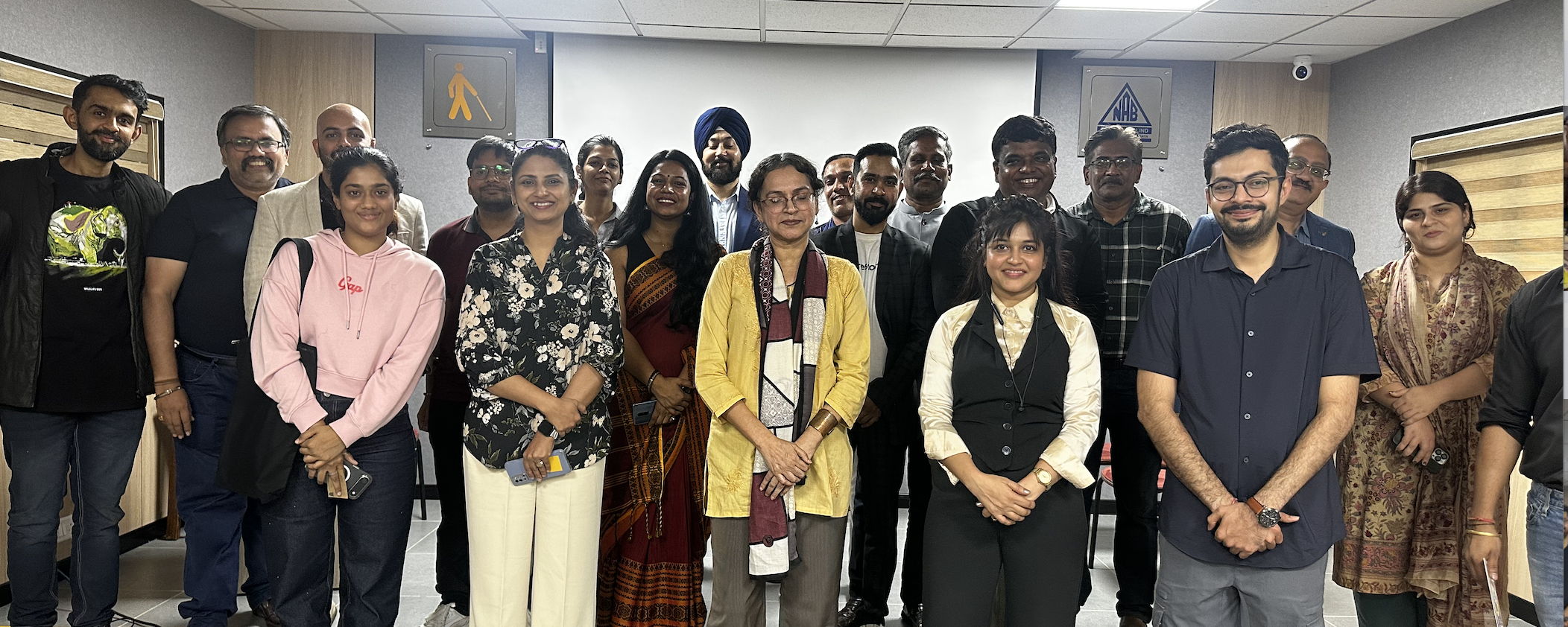


Industry leaders warn Net Zero faces an execution gap as AI, procurement and green finance reshape climate action, led by Harsha Saxena.
Net Zero Shifts from Awareness to Execution Challenge
Industry leaders warn that Net Zero is increasingly facing an execution problem as companies move from ESG reporting and long-term climate commitments to the practical challenges of implementation. At the IICSR–NAB-MEPSC CSO Roundtable 2026 in Bengaluru, executives and professionals from organisations including SAP, IBM, HSBC, Brigade Group, Flipkart Group, Amadeus Software Labs, climate-tech firms, sustainability consultancies and social-sector organisations discussed the barriers preventing green solutions from scaling beyond pilots into mainstream business operations.
Across sectors, participants agreed that awareness is no longer the primary challenge. Businesses already understand the need to reduce emissions, improve resource efficiency and respond to investor and regulatory expectations. However, many still struggle to integrate sustainability into procurement systems, financial decision-making, technology infrastructure, operations, supply chains and workforce capabilities. Harsha Saxena, Founder and CEO of IICSR Group and convenor of the dialogue, said the gap between sustainability challenges and available solutions has become one of the biggest barriers to progress. He noted that the climate transition does not require more discussion about why sustainability matters, but stronger systems that connect industry problems with innovators, procurement mechanisms that can adopt solutions, finance that can scale them and professionals capable of implementation.
ESG Moves from Reporting to Organisational Execution
A key theme that emerged was the shift from ESG disclosure to ESG execution. Participants emphasised that sustainability cannot remain confined to ESG or CSR departments, as environmental performance is ultimately shaped by decisions made across procurement, engineering, manufacturing, finance, IT and supply-chain functions. Prof. Abhishek Ranjan highlighted organisational culture as a critical but often overlooked factor, arguing that sustainability must be embedded in everyday employee behaviour and operational decision-making to create meaningful impact. This shift also places greater responsibility on leadership, as alignment with board and CEO priorities determines whether sustainability becomes operationally actionable.
Procurement Systems Emerge as Key Bottleneck for Green Scale-Up
Procurement was identified as one of the most significant bottlenecks in scaling green innovation. Climate-tech entrepreneurs noted that while sustainability teams may support green solutions, procurement systems often prioritise cost, reliability, scale and contractual performance, making it difficult for sustainable alternatives to compete. Participants suggested that sustainability criteria need to be integrated into vendor evaluation frameworks and that lifecycle value should be considered alongside upfront costs. This reflects a broader contradiction in corporate sustainability, where public Net Zero commitments often coexist with procurement systems designed for conventional economic models.
AI and Digital Infrastructure Add a New Carbon Challenge
Artificial intelligence and digital infrastructure emerged as another major area of concern. As organisations adopt generative AI at scale, participants highlighted the rising energy demand of data centres and computing systems. Discussions included green software engineering, carbon-aware computing and energy-efficient AI design. Abhishek Ranjan pointed to the hidden carbon cost of digital intelligence, noting that inefficiencies in everyday enterprise AI usage are often not measured. He argued that sustainability in AI will increasingly depend not only on cleaner data centres but also on reducing unnecessary computation and improving digital efficiency. This could make AI efficiency a governance, procurement and sustainability issue in addition to a technical one.
Real Estate Sector Exposes Cost–Sustainability Trade-Off
The real estate sector illustrated the tension between environmental ambition and commercial viability. Dr. Pradeep Kumar Rao of Brigade Group explained that Net Zero buildings require integrated systems involving materials, energy, water and lifecycle management, which can increase costs. In one case, sustainability features added approximately ₹200 per square foot, raising questions about consumer willingness to pay. He emphasised that green buildings must deliver tangible value such as lower operating costs and improved efficiency to achieve market acceptance. The example of Brigade Citrine, with significantly lower emissions than benchmark levels, reinforced the idea that sustainability must also make economic sense to scale.
Climate-Tech Innovation Stuck in the “Pilot Trap”
Climate-tech entrepreneurs highlighted a recurring “pilot trap,” where innovations receive early interest and demonstration opportunities but fail to transition into large-scale procurement. While companies may support experimentation, mainstream adoption requires climate solutions to compete on price, performance, reliability and supply capacity. Participants stressed that innovation alone is insufficient and that commercialisation is essential for climate impact.
Green Hydrogen Faces Infrastructure and Financing Barriers
The discussion on green hydrogen reflected similar challenges, particularly in balancing early investment with infrastructure readiness. Experts noted that large-scale adoption depends on renewable energy availability, financing mechanisms, industrial pilots, logistics infrastructure and policy certainty. The transition was described as especially complex in emerging economies, where industrial growth and decarbonisation must progress simultaneously.
SMEs and Supply Chains Pose Scope 3 Emissions Risk
Attention was also drawn to SMEs and supply chains, which may become a weak link in Scope 3 emissions management. While large corporations are advancing ESG systems, many smaller suppliers lack the resources, expertise and data infrastructure to meet sustainability expectations. This gap could significantly affect corporate Net Zero outcomes, as supply-chain emissions remain a major component of overall impact.
Sustainability Talent Gap Extends Beyond ESG Specialists
A shortage of sustainability talent was identified as another constraint. Participants noted that future demand will extend beyond dedicated ESG professionals to include procurement teams, engineers, finance professionals, operations managers and technology leaders who understand sustainability within their functional roles. This reflects a shift from specialised sustainability roles to organisation-wide sustainability literacy.
Sustainability Must Evolve from Compliance to Purpose
Dr. Sangeeta Mansur framed the broader transition as an evolution from compliance to strategy to purpose, emphasising that sustainability must become embedded in organisational culture and leadership consciousness. She highlighted that the climate transition is not only a technological challenge but also an organisational transformation requiring systems thinking and integrated decision-making.
Beyond Carbon: Inclusion, Water and Biodiversity Gain Focus
Participants also cautioned that sustainability cannot be limited to carbon emissions alone. Issues such as water security, biodiversity, ecological restoration and inclusion must also be considered. Insights from Dr. Rajesh M. S. of the National Association for the Blind, Karnataka, highlighted the importance of inclusive design, noting that sustainability solutions must remain accessible and usable for all communities.
Call for Integrated Green Business Ecosystem
The roundtable concluded that many of the challenges identified stem from a fragmented sustainability ecosystem in which corporations, innovators, investors, consultants and training institutions operate in silos. To address this, participants discussed the idea of a Green Business Corridor that would connect sustainability challenges with climate-tech solutions, procurement systems, financing mechanisms and talent development pathways. Harsha Saxena emphasised that the goal is to build an implementation infrastructure rather than another networking platform, where sustainability becomes embedded across procurement, engineering, finance and operations.
Further CSO Roundtables are planned across Goa, Pune, Mumbai and Delhi, with outcomes expected to inform the International Net Zero Summit 2027. The Bengaluru discussions suggest that corporate sustainability is entering a more demanding phase, where success will depend not on commitments alone but on how organisations redesign procurement, investment, operations, technology adoption and workforce capabilities to enable real-world implementation of Net Zero goals.
Harsha Saxena
IICSR and Sustainability Knowledge Management
+1 628-278-3652
email us here
Visit us on social media:
LinkedIn
Instagram
Facebook
YouTube
X
Other
Snapshots from IICSR NAB MEPSC CSO Roundtable Bangalore
Legal Disclaimer:
EIN Presswire provides this news content "as is" without warranty of any kind. We do not accept any responsibility or liability for the accuracy, content, images, videos, licenses, completeness, legality, or reliability of the information contained in this article. If you have any complaints or copyright issues related to this article, kindly contact the author above.
